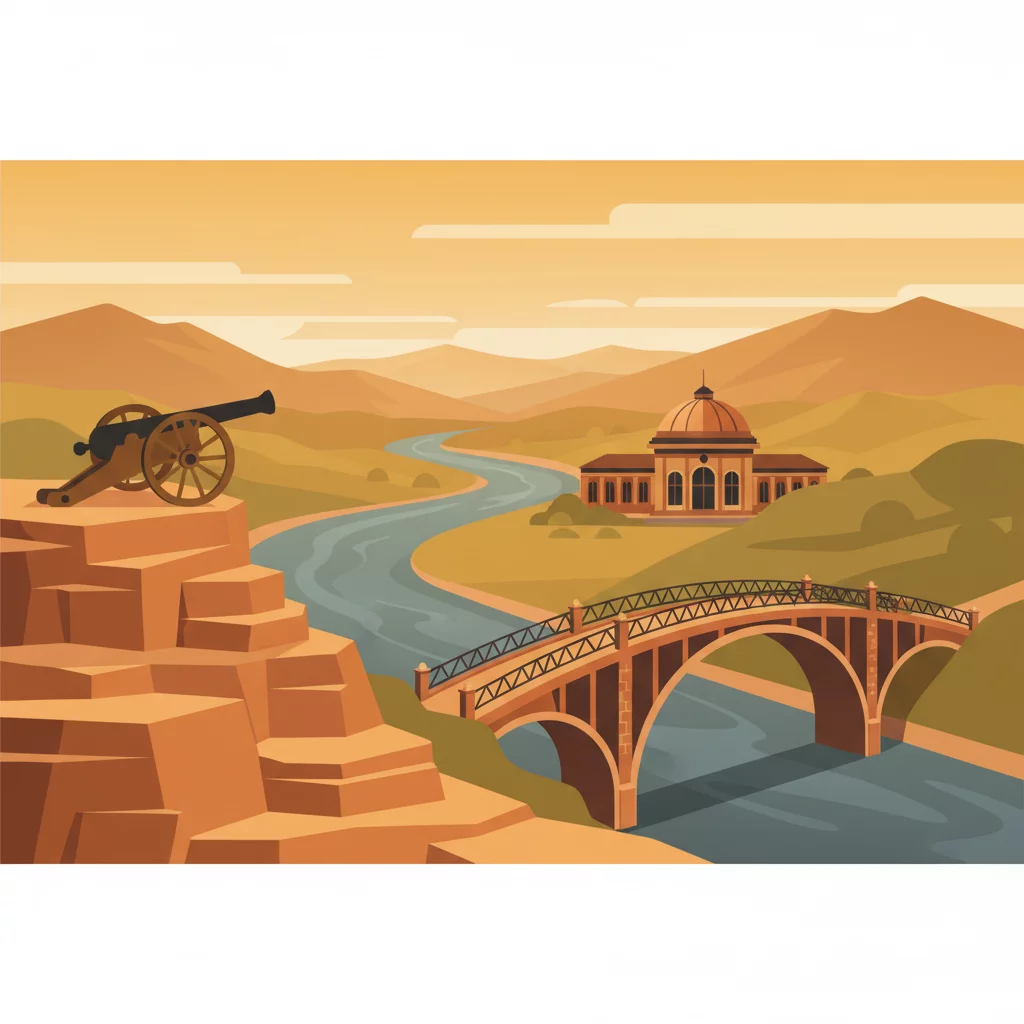
From Civil War battlefields on Lookout Mountain to a 130-year-old pedestrian bridge and the train station that inspired a hit song, these are the historic sites in Chattanooga that tell the city's story.
People come to Chattanooga for the hiking and the food scene. Fair enough - both are excellent. But the city's history is genuinely fascinating, and most visitors barely scratch the surface. This is a place where one of the most decisive campaigns of the Civil War played out across ridges and river bends that you can still stand on today. It is where the modern rock climbing movement took root, where a busted bridge became the world's longest pedestrian bridge, and where a rust belt city reinvented itself so completely that it became a national model for urban revival.
You do not need to be a history buff to appreciate these sites. The stories are dramatic, the settings are stunning, and most of the best spots are free or close to it. Here are 10 historic places in Chattanooga worth carving out time for.
1. Chickamauga & Chattanooga National Military Park
The Chickamauga Battlefield is the oldest and largest military park in the country, and it is one of those places that just feels different when you are standing there. The September 1863 battle was one of the bloodiest of the entire war - over 34,000 casualties in two days of fighting across fields and forests that look almost exactly the same today.
Start at the visitor center, where park rangers can point you to the most significant spots along the 7-mile driving tour. The monuments are everywhere - over 1,400 of them - placed by veterans who came back decades later to mark where their units fought. Each one tells a story if you read the inscriptions. The Wilder Tower gives you a panoramic view of the battlefield from 85 feet up.
The park stretches across two states and multiple sites. Lookout Mountain and Missionary Ridge sections are in Chattanooga proper, while the main battlefield is about 10 miles south in Fort Oglethorpe, Georgia. All are free to visit.
Getting there: The Chickamauga Battlefield Visitor Center is about 15 minutes south of downtown Chattanooga on US-27. Free parking and free admission.
2. Point Park on Lookout Mountain
Point Park sits at the tip of Lookout Mountain and marks the site of the famous "Battle Above the Clouds" from November 1863. Union forces under General Joseph Hooker fought their way up the steep mountainside through fog so thick that soldiers on both sides could barely see what was happening. The battle helped break the Confederate siege of Chattanooga and set the stage for Sherman's march to Atlanta.
Today the park has some of the most dramatic views in the region. You can see the Tennessee River bending around Moccasin Bend, downtown Chattanooga spreading along the river's edge, and on clear days, parts of seven states. The Ochs Museum inside the park covers the Chattanooga Campaign with maps, artifacts, and a James Walker painting that measures 13 by 33 feet.
There is a small entrance fee since this section is managed by the National Park Service, but your ticket also gets you into Cravens House down the slope. The park connects to several hiking trails including the Bluff Trail that winds along the cliff edge.
Hours: Daily 9am-5pm. Adults $10, children 15 and under free.
3. Cravens House
Halfway up Lookout Mountain, Cravens House is the oldest surviving structure on the mountain and the site of some of the heaviest fighting during the Battle of Lookout Mountain. Robert Cravens built the house in 1856, and by November 1863 it was being used as Confederate headquarters when Union troops attacked uphill through the fog.
The house took heavy damage during the battle and was later rebuilt using many of the original materials. Today it is restored to its wartime appearance, and you can walk through the rooms where officers planned their defense of the mountain. The grounds around the house have interpretive signs explaining troop movements, and the view down toward St. Elmo gives you a visceral sense of just how steep the Union advance was.
Cravens House is included with your Point Park admission and is accessible via a trail from Point Park or by car from the Ochs Highway.
4. Walnut Street Bridge
The Walnut Street Bridge has had two lives. When it opened in 1891, it was a standard vehicle and pedestrian bridge connecting downtown Chattanooga to the north side of the river. Cars and trucks crossed it for decades until structural problems shut it down in 1978. It sat abandoned for years, slowly deteriorating, and demolition seemed inevitable.
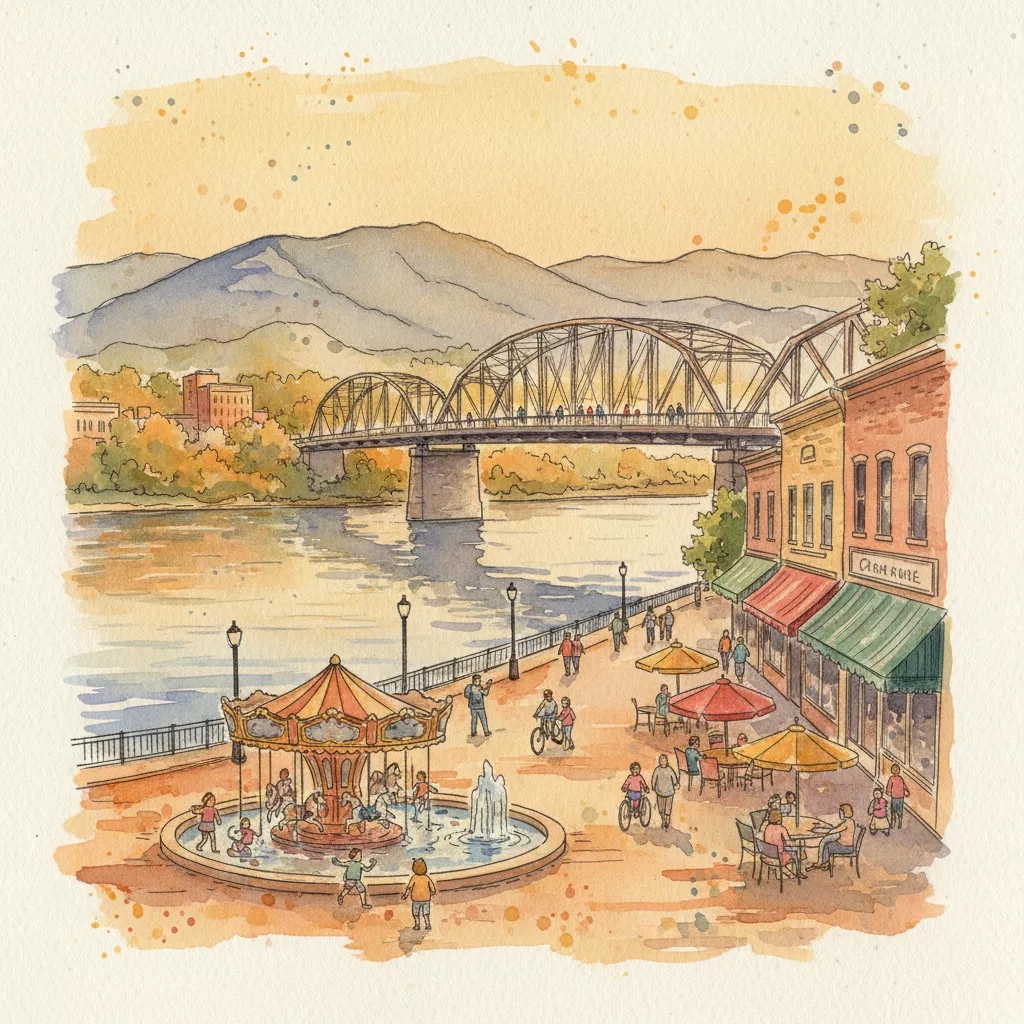
Instead, the city did something unusual. In 1993, Chattanooga restored the bridge and reopened it as a pedestrian-only crossing - at 2,376 feet, one of the longest pedestrian bridges in the world. The decision was part of a broader riverfront revitalization that transformed the city, and the bridge became its symbol.
Today it connects downtown to the North Shore neighborhood and Coolidge Park. Walking across it at sunset with the river below and Lookout Mountain in the distance is one of those simple Chattanooga experiences that sticks with you. The bridge also sits right along the Tennessee Riverwalk, so you can combine a crossing with a longer walk or bike ride.
5. Bluff View Art District
The Bluff View Art District is a cluster of historic buildings perched on the bluffs above the Tennessee River, just east of the Walnut Street Bridge. In the early 1990s, a couple named Charles and Mary Portera started buying and restoring neglected properties in this area - a Craftsman bungalow here, a Colonial Revival mansion there - and turned them into galleries, restaurants, and gardens.
The result is a pocket of Chattanooga that feels like a small European village. Cobblestone paths wind between the Hunter Museum of American Art, the River Gallery sculpture garden, and Rembrandt's Coffee House in a restored 1920s home. The Houston Museum of Decorative Arts, tucked into an unassuming house nearby, holds one of the most eclectic collections of antique glass, pottery, and textiles you will find anywhere in the South.
The district is walkable, free to explore (museum admissions vary), and sits at the perfect intersection of Chattanooga's history and its creative present. It is especially nice on a weekend morning with a coffee from Rembrandt's and nowhere in particular to be.
6. The Incline Railway
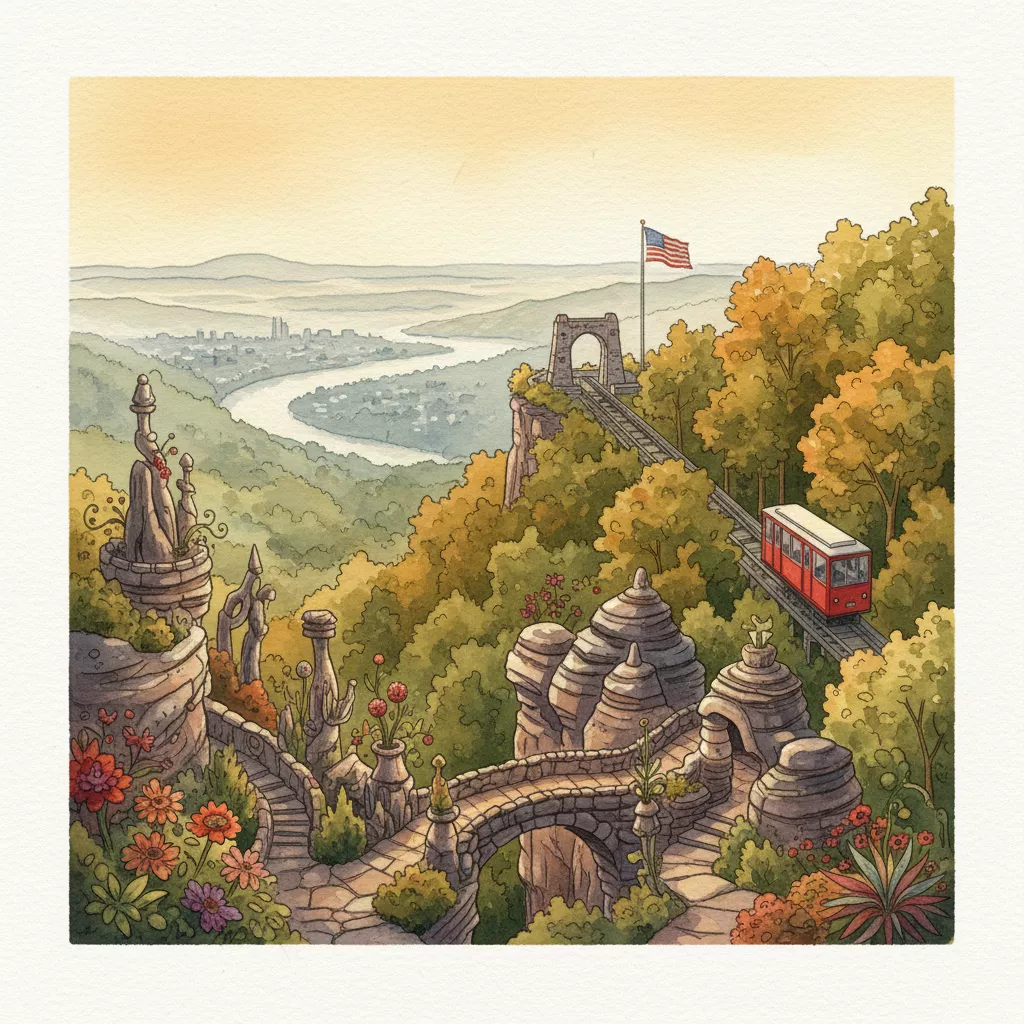
The Incline Railway has been hauling people up Lookout Mountain since 1895 and claims to be the world's steepest passenger railway, hitting a 72.7% grade near the top. The ride is only about 10 minutes each way, but the view out the back window as the city drops away below you is legitimately dramatic.
The railway was originally built as a tourist attraction during the era when Lookout Mountain was developing as a resort destination. It survived the Great Depression, two world wars, and changing travel patterns to become one of Chattanooga's most enduring landmarks. The cars are updated, but the route and the experience are essentially the same ones visitors have had for over 130 years.
The lower station is in St. Elmo, a neighborhood worth exploring on its own with its Victorian homes and walkable commercial stretch along Tennessee Avenue. The upper station puts you near Point Park and Rock City.
Hours: Daily, departures every 15-20 minutes. Round-trip tickets around $25 for adults.
7. Bessie Smith Cultural Center
The Bessie Smith Cultural Center sits on Martin Luther King Boulevard in the heart of what was once Chattanooga's thriving African American business district, known as the Big Nine. The center is named for Bessie Smith, the "Empress of the Blues," who was born in Chattanooga in 1894 and became one of the most influential musicians of the 20th century.
The center houses a performance hall and galleries that rotate exhibitions on African American history and culture, with a particular focus on Chattanooga's Black community. Exhibits have covered everything from the civil rights movement in Tennessee to the history of blues music in the South. The building also hosts concerts, film screenings, and community events throughout the year.
MLK Boulevard is in the process of revitalization, and the Bessie Smith Cultural Center is an anchor of that effort. If you visit, take a few minutes to walk the street and notice the murals and historic markers that tell the story of this neighborhood.
8. Reflection Riding Arboretum & Nature Center
Reflection Riding sits in a valley at the base of Lookout Mountain and manages to be both a nature preserve and a historic landscape. The 317-acre property includes a 3-mile driving loop through meadows and forests, native wildlife enclosures with red wolves and bald eagles, and walking trails that wind through what was once part of the Cherokee homeland and later a Civil War battleground.
During the Chattanooga Campaign, both Union and Confederate forces moved through this valley. Interpretive signs along the trails mark troop positions and explain how the terrain shaped the fighting. The property also preserves sections of the old road to Lookout Mountain that travelers have used for centuries.
Beyond the history, it is simply a beautiful place. The Cherokee name for Lookout Mountain was "Chatanugi," and standing in this valley looking up at the mountain, you understand why the area has drawn people for thousands of years.
Hours: Daily 9am-5pm. Adults $15, children $8. The driving loop and walking trails are both accessible.
9. Moccasin Bend National Archeological District
Moccasin Bend is the horseshoe-shaped peninsula formed by the Tennessee River as it curves around the base of Lookout Mountain. It is one of the most archaeologically significant sites in the Southeast, with evidence of human habitation going back at least 12,000 years - from Paleo-Indian hunters to Woodland period settlements to Cherokee villages to Civil War encampments.
The bend was designated a National Historic Landmark in 2003 and became part of the Chickamauga & Chattanooga National Military Park system. Development has been slow and careful given the sensitivity of the site, but you can currently access walking trails and see the bend from overlooks at Point Park and the Walnut Street Bridge.
For now, the best way to appreciate Moccasin Bend is from a distance - the view from Lookout Mountain shows the full curve of the river around the peninsula. It is one of those landscapes that has looked essentially the same for millennia, even as the city grew up around it.
10. The Chattanooga Choo Choo & Terminal Station
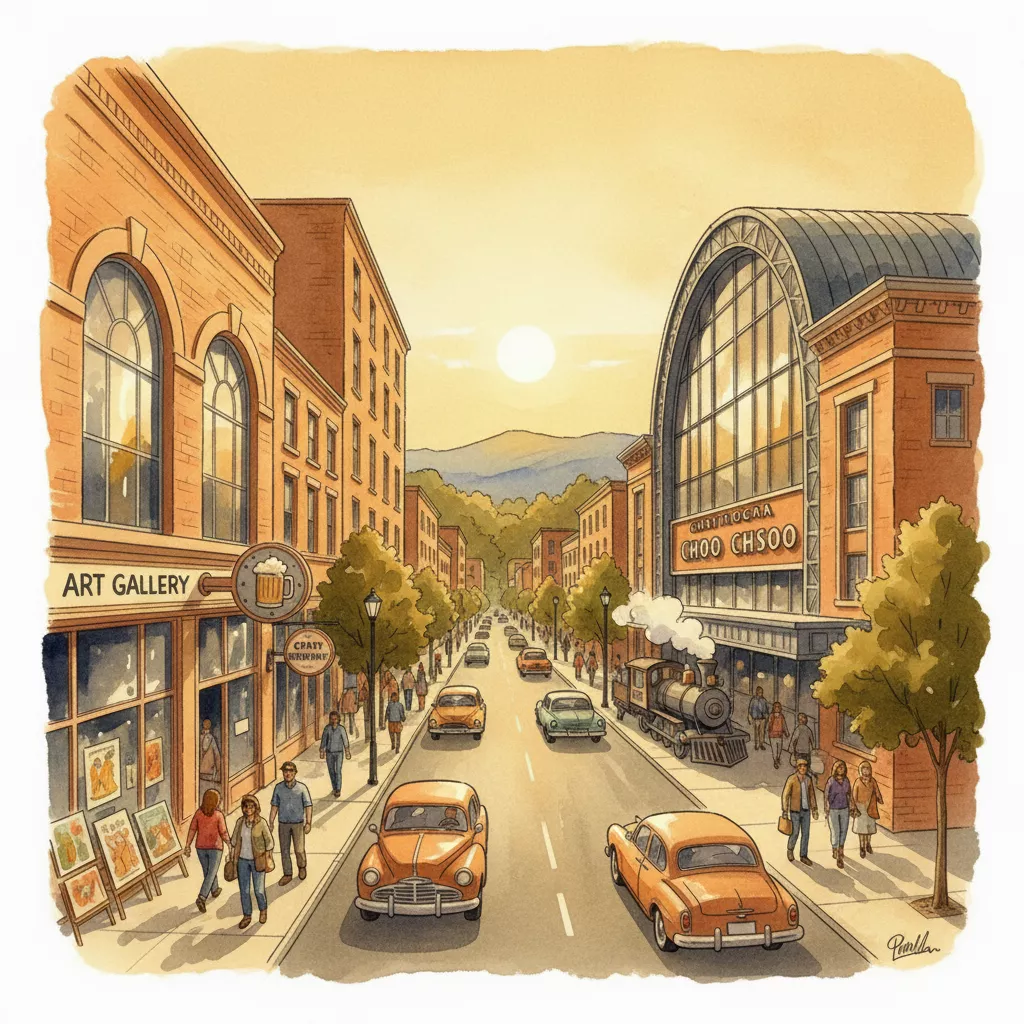
Terminal Station opened in 1909 as a grand beaux-arts train station and became famous after Glenn Miller's 1941 hit "Chattanooga Choo Choo" turned the city's name into a piece of American pop culture. The song won the first ever gold record, and suddenly everyone knew the name Chattanooga even if they had never been within 500 miles of Tennessee.
When passenger rail service ended in 1970, the station was converted into a hotel and entertainment complex. The main lobby, with its soaring dome ceiling and original architectural details, still looks much like it did when travelers first walked through it over a century ago. Retired train cars in the rail yard have been converted into hotel rooms - you can actually sleep in a Pullman sleeper car.
The surrounding complex has restaurants, shops, and a model railroad museum. It is a little kitschy in places, sure. But the building itself is genuinely grand, and the story of how a train station became a cultural icon through a three-minute swing song is pure Americana.
Location: 1400 Market Street, walking distance from Southside and the downtown core.
Planning Your History Tour
You could hit all 10 of these spots in a very packed two days, but three days is more realistic if you actually want to read the markers, walk the trails, and soak things in. Here is a rough grouping:
Day 1 - Lookout Mountain: Start with the Incline Railway up to Point Park, walk down to Cravens House, then drive to Reflection Riding at the mountain's base. This covers the Civil War sites plus the nature preserve.
Day 2 - Downtown & River: Walk the Walnut Street Bridge to North Shore, explore Bluff View Art District and the Hunter Museum, then head to the Bessie Smith Cultural Center and Terminal Station.
Day 3 - Chickamauga: Give the battlefield a full morning or afternoon. The driving tour is 7 miles, but you will want to get out and walk at several stops. The visitor center film and museum are worth starting with.
If you are combining history with the rest of what Chattanooga offers - and you should - check out our guides to free things to do, the best museums, and our 3-day itinerary for first-time visitors. The historic sites overlap nicely with the city's best outdoor adventures and downtown dining scene.
Details about businesses mentioned in this article (hours, offerings, atmosphere, and more) may change or may not be fully accurate. Spot something that needs a correction? Let us know and we'll fix it right away.